CLIENT |

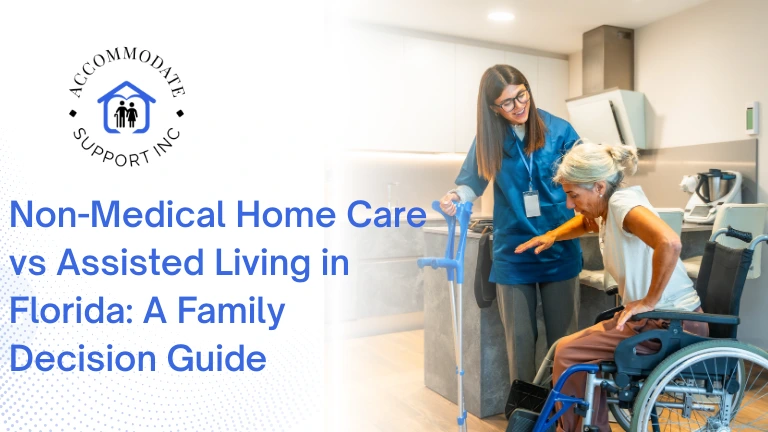
Non-Medical Home Care vs Assisted Living in Florida: A Family Decision Guide

Introduction
Non-medical home care vs assisted living in Florida is a question many families face when an aging parent begins needing daily support. The decision is rarely simple. It involves emotional readiness, lifestyle changes, and concerns about safety, independence, and overall quality of life.
Families want to make the right choice, but the options can feel overwhelming. Should your loved one remain in the comfort of home with support, or transition to a structured community environment?
In this guide, we’ll explore the real differences between non-medical home care in Florida and assisted living in Florida, focusing on lifestyle impact, emotional readiness, and the moments when families often wish they had acted sooner. The goal is to provide honest insights so you can make a confident, informed decision for your loved one.
Many families across Florida, including Orlando and Orange County, begin researching these care options long before a major health event occurs. Understanding the differences early allows seniors to maintain more control over their care decisions.
Table of Contents
Understanding Non-Medical Home Care vs Assisted Living in Florida
When families compare non-medical home care vs assisted living in Florida, they’re usually deciding between two very different living experiences.
Non-Medical Home Care
Non-medical home care in Florida allows seniors to remain in their own homes while receiving help with daily activities.
Common services include:
- Meal preparation
- Light housekeeping
- Medication reminders
- Companionship
- Transportation to appointments
- Personal care assistance
Caregivers visit according to the senior’s needs, whether that’s a few hours per week or full-time support.
Companies like Accommodate Support Inc focus on helping seniors stay safe, comfortable, and independent in familiar surroundings.
Assisted Living
Assisted living communities in Florida provide housing, meals, and personal care in a shared residential setting.
Typical features include:
- Private or semi-private apartments
- On-site caregivers
- Group activities
- Dining services
- Medical coordination
Residents live in a community environment designed to support seniors who need daily assistance but not full medical care.
Quick Comparison: Non-Medical Home Care vs Assisted Living in Florida
| Factor | Non-Medical Home Care | Assisted Living |
| Living Environment | Senior remains in their own home | Residential community |
| Independence | High | Moderate |
| Personalization | Highly customized care plans | Structured services |
| Social Interaction | Depends on family and visitors | Built-in community activities |
| Daily Routine | Flexible and familiar | Scheduled routines |
This quick comparison often helps families better visualize the practical differences when evaluating non-medical home care vs assisted living in Florida.
Lifestyle Impact: Home Care vs Assisted Living
The lifestyle difference between home care services for seniors and assisted living often becomes the most important factor.
Staying at Home
With non-medical home care in Florida, seniors maintain:
- Their daily routines
- Familiar surroundings
- Personal belongings and memories
- Neighborhood connections
For many older adults, remaining at home preserves a strong sense of independence and identity.
Care services are designed to adapt around the senior’s life rather than changing the environment entirely.
Moving to Assisted Living
Assisted living introduces a new routine.
Benefits may include:
- Structured activities
- Social opportunities
- On-site support at all times
- Reduced household responsibilities
However, the transition can also feel overwhelming for seniors who strongly value their independence or attachment to home.
Lifestyle adjustment is often the biggest emotional challenge families encounter when comparing non-medical home care vs assisted living in Florida.
Emotional Readiness of Seniors
Emotional readiness plays a critical role in the success of either option.
When Seniors Prefer Home Care
Many seniors are emotionally ready for in-home care services in Florida because:
- They want to maintain control over their environment
- They feel safer in familiar surroundings
- They prefer one-on-one companionship rather than group settings
For these individuals, home care feels supportive rather than disruptive.
When Assisted Living May Feel Right
Some seniors eventually feel relieved moving to assisted living when:
- Household responsibilities become stressful
- Isolation becomes a concern
- Daily assistance is needed throughout the day
The key is recognizing the senior’s comfort level and involving them in the decision.
Professional caregivers often observe that seniors adjust better when support is introduced gradually rather than after a sudden health event.
When Families Regret Waiting Too Long
One common pattern professionals observe is families waiting until a crisis occurs.
This might include:
- A fall at home
- Rapid health decline
- Caregiver burnout within the family
- Increased isolation or depression
When support arrives too late, the choices can become limited.
Instead of carefully comparing non-medical home care vs assisted living in Florida, families may feel forced into quick decisions.
Introducing support earlier often allows seniors to adjust gradually while maintaining more control over the process.
Organizations such as Accommodate Support Inc often encourage families to consider care before a crisis develops.
Honest Pros and Cons of Each Option
Understanding the strengths and limitations of each option helps families make balanced decisions.
Pros of Non-Medical Home Care
- Seniors remain in their own homes
- Care plans are flexible and personalized
- One-on-one attention from caregivers
- Familiar routines and comfort
Cons of Non-Medical Home Care
- Homes may require safety modifications
- Limited built-in social activities
- Care scheduling must be coordinated
Pros of Assisted Living
- Social engagement opportunities
- Structured daily routines
- Staff available on-site
- Maintenance-free living
Cons of Assisted Living
- Leaving home can be emotionally difficult
- Less privacy compared to living at home
- Adjustment period for new environment
For many families, the decision ultimately depends on which environment best supports their loved one’s emotional well-being and daily needs.
According to the U.S. Administration for Community Living, aging in place remains a preference for most older adults in the United States.
Additional research from the National Institute on Aging also highlights that many seniors prefer care solutions that allow them to remain in familiar environments for as long as safely possible.
Frequently Asked Questions
1 What is the main difference between non-medical home care and assisted living?
The main difference is the living environment. Non-medical home care in Florida allows seniors to remain at home while receiving assistance, whereas assisted living in Florida involves moving into a residential care community.
2 Is non-medical home care more affordable than assisted living?
Costs vary depending on care hours and services needed. Some families find home care services for seniors more flexible because care schedules can be adjusted based on needs.
3 How do I know when assisted living might be necessary?
Assisted living may be appropriate when seniors require daily supervision, struggle with home safety, or feel isolated living alone.
4 Can seniors transition from home care to assisted living later?
Yes. Many families start with in-home care services in Florida and transition to assisted living later if needs increase.
5 How can families start the conversation about care?
Open conversations that focus on safety, independence, and quality of life often help seniors feel included in the decision-making process.
Conclusion
Deciding between non-medical home care vs assisted living in Florida is a deeply personal choice for families. The right option depends on a senior’s lifestyle preferences, emotional readiness, and the level of daily support they need. While some seniors benefit from the structure and community of assisted living, others thrive with personalized help that allows them to remain comfortably at home.
By understanding the real differences between these care options, families can make thoughtful decisions that protect both safety and independence. Taking time to explore support solutions early often leads to smoother transitions and better long-term outcomes for everyone involved.
📞 Personalized Home Care Support for Seniors in Florida
Choosing between non-medical home care vs assisted living in Florida can feel overwhelming for families who want the best balance of safety, independence, and comfort for their loved ones. Understanding care options is the first step toward making a confident decision.
Accommodate Support Inc provides compassionate non-medical home care in Florida, helping seniors remain safe, comfortable, and independent in the place they know best — their home.
Our support services may include:
- Companion care and social support
- Assistance with daily routines
- Meal preparation and light household support
- Transportation for appointments and errands
- Safety-focused in-home assistance
Families exploring home care services for seniors in Florida, including Orlando and Osceola County, can reach out anytime to ask questions and learn about supportive in-home care options.
There’s no pressure and no obligation — just helpful guidance for families planning the next step in senior care.
📞 Need guidance choosing the right care option for a loved one?
Call: 407-663-2587
Email: [email protected]
📲 Follow Accommodate Support Inc on Facebook for senior care tips, safety advice, and caregiving insights.
Because the right care solution helps seniors maintain independence, dignity, and peace of mind at home.